
Introduction to Leather Jacket Pricing
Leather jackets have long been a symbol of timeless style and status, captivating fashion enthusiasts across generations. Their robust material and distinctive aesthetic make them not only a significant clothing item but also a statement in personal style. As a consumer, understanding the pricing structure of leather jackets is crucial, given the wide range of options available in the market. With varying costs, a consumer can find leather jackets that cater to diverse budgets and styles.
The appeal of leather jackets lies not just in their physical attributes, but also in their cultural significance. They are often associated with rebellion and independence, most famously embodied by icons in film and music. This allure can influence pricing, as some brands leverage their heritage and reputation, thus impacting the perceived value of their products.
When assessing the cost of a leather jacket, it is important to consider multiple factors, including the quality of the leather, craftsmanship, brand reputation, and design details. Higher-quality leather, such as full-grain or top-grain, often commands a premium due to its durability and luxurious look. Similarly, jackets crafted by skilled artisans from reputable brands tend to be more expensive, as they reflect meticulous attention to detail and superior design. Consumers should also be aware of the variation in market prices based on seasonal trends, location, and promotional sales that can dramatically alter the landscape of leather jacket pricing.
Ultimately, understanding the price range for leather jackets enables consumers to make informed decisions while navigating the rich tapestry of options. From affordable options for those on a tighter budget to high-end designer pieces, there is a leather jacket for every taste and price point.
Factors Affecting Leather Jacket Cost
The cost of a leather jacket is influenced by a multitude of factors, each contributing to the overall pricing in unique ways. Understanding these elements can help consumers make informed purchasing decisions.
Firstly, the quality of the leather used plays a crucial role. High-quality leather, such as full-grain or top-grain, typically commands higher prices due to its durability and superior appearance. In contrast, lower grades of leather, while more affordable, may not offer the same longevity or aesthetic appeal. The tanning process also affects costs; using traditional methods may increase production time and expenses, leading to a higher retail price.
Another significant factor is brand reputation. Established brands that have built a strong reputation for quality and craftsmanship often charge premium prices. Consumers are often willing to pay more for a recognizable brand, as they associate it with reliability and style. On the other hand, lesser-known brands may offer more affordable options, but this could be indicative of lower material quality or production standards.
Production costs also impact the final price of a leather jacket. Jackets that are handcrafted or produced in limited quantities may be more expensive due to the labor intensity involved and the attention to detail required. Conversely, mass-produced options might be more budget-friendly but may lack individuality and craftsmanship.
Finally, market demand for specific styles must be considered. Fashion trends can drive the cost of certain leather jackets up, particularly if they become highly sought after. Limited edition or designer collaborations often see a spike in demand, consequently reflecting higher prices in retail settings.
Understanding Leather Quality
When evaluating the cost of a leather jacket, it is crucial to understand the various types of leather available in the market, as the quality of leather significantly impacts both durability and price. The three most common types of leather used in jacket production are full-grain leather, top-grain leather, and bonded leather.
Full-grain leather is considered the highest quality due to its natural characteristics. It is made from the outermost layer of the hide, retaining the original texture and markings. This type of leather ages beautifully, developing a unique patina over time, which enhances its aesthetic appeal. Additionally, full-grain leather boasts superior durability, making jackets made from this material a long-lasting investment. However, due to its premium quality, full-grain leather jackets often come at a higher price point.
Top-grain leather is the second-highest quality, as it is made from the upper layer of the hide but has been sanded and treated to remove imperfections. While it is slightly less durable than full-grain leather, top-grain leather still offers significant resistance to wear and tear. Jackets crafted from this material tend to be more affordable than their full-grain counterparts but still deliver a level of quality that ensures longevity.
In contrast, bonded leather is a combination of leather scraps that have been bonded together with polyurethane or latex. This material is considerably less expensive but also less durable than Full Grain or Top Grain Leather. While bonded leather jackets can be visually appealing and budget-friendly, they do not offer the same level of quality and longevity as other leather types.
By understanding the distinctions among these types of leather, consumers can make informed decisions when selecting a leather jacket. Opting for a higher-quality leather type can ultimately lead to greater satisfaction, as it ensures a robust and long-lasting product that withstands the test of time.
The Importance of Craftsmanship
When it comes to leather jackets, craftsmanship plays a pivotal role in determining not only the quality but also the price of the product. True craftsmanship involves a meticulous process of designing, selecting high-grade materials, and sewing that result in jackets that stand out from mass-produced alternatives. A well-crafted leather jacket is not merely a piece of clothing; it is an investment in style and durability.
In the realm of leather jacket production, artisans employ a range of techniques that reflect their skills and commitment to excellence. For instance, hand-cutting and sewing are often hallmarks of high-end jackets. This attention to detail ensures accuracy and fit that factory production lines cannot replicate. High-quality leather is essential, as it not only contributes to the aesthetics but also impacts the jacket’s longevity. Tanning processes, for example, can vary significantly; vegetable-tanned leather is renowned for its richness and durability, whereas chrome-tanned leather, although cheaper, may not offer the same level of confidence in terms of durability and maintenance.
A superior jacket frequently includes features such as reinforced stitching, quality zippers, and a thoughtfully designed interior lining. These small but significant details are often subconscious indicators of craftsmanship that influence the overall experience of wearing the jacket. The craftsmanship found in top-tier leather jackets often reflects a brand’s heritage and dedication to quality, which can further justify the higher price point.
Ultimately, the price of a leather jacket should be viewed through the lens of craftsmanship. A well-crafted piece not only embodies aesthetic appeal but also promises longevity. Investing in a high-quality leather jacket, therefore, can be seen as acquiring a timeless item that transcends fleeting fashion trends.
Brand Value and Its Impact on Price
The cost of a good leather jacket can vary significantly based on several factors, among which brand value plays a crucial role. Premium brands like Vogue Jacket are synonymous with quality and prestige, which influences not only the price but also consumer perceptions. The reputation accrued by such brands often stems from years of craftsmanship, innovation in design, and loyalty to customer satisfaction.
When customers invest in a leather jacket from a recognized brand, they are not merely purchasing a piece of clothing but also acquiring a status symbol. The allure of owning an item from a reputable brand, known for its durability and style, justifies the higher price point. Brand recognition contributes immensely to perceived value; consumers often associate well-known brands with superior materials and meticulous production standards, which can raise their expectations of longevity and style.
The psychology of branding means consumers are often willing to pay significantly more for the luxury of brand association. This is especially true in the leather goods market. For instance, leather jackets crafted by Vogue Jacket often cost more than similar items from lesser-known labels. In part, this is because consumers trust that these brands have invested in quality control and ethical sourcing of materials, a factor that can justify a premium on their products.
Ultimately, while other elements such as design and functionality significantly affect a leather jacket’s price, the weight of brand prestige cannot be discounted. Higher-priced jackets from established brands often resonate with consumers who value tradition and reputation, leading them to allocate a larger portion of their budget towards these products. Thus, the interplay between brand value and pricing strategy is a critical consideration for anyone looking to purchase a quality leather jacket.
Price Points and What to Expect
The cost of a leather jacket can widely vary based on several factors including brand, craftsmanship, materials used, and overall design. Understanding the different price points can help consumers make informed choices when selecting their ideal leather jacket.
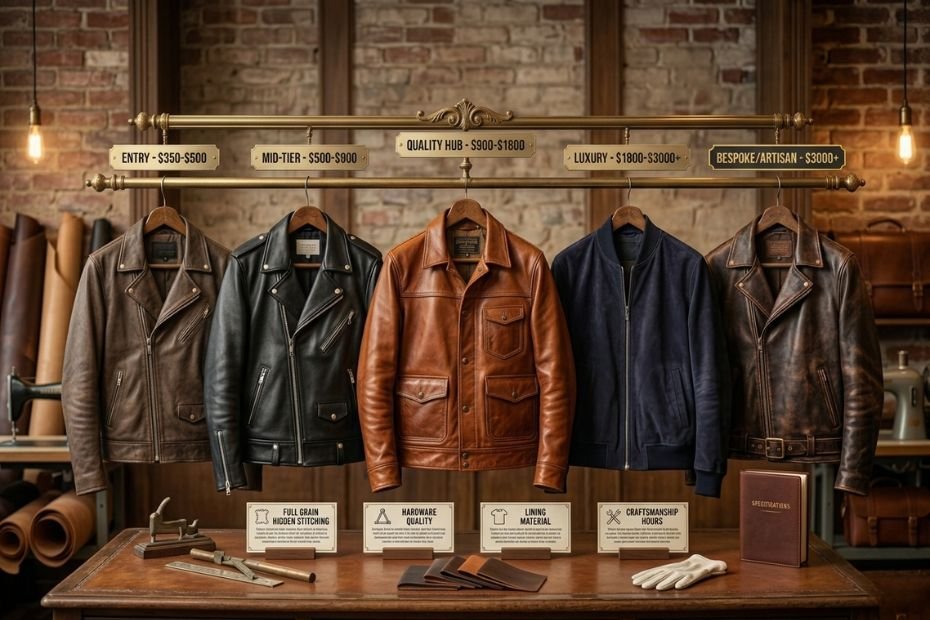
Starting with the entry-level range, which typically falls between $100 to $300, consumers can expect jackets made from lower-quality leather or synthetic alternatives. These jackets often exhibit limited durability and design variations. However, they can serve as reasonable options for those seeking fashion over function or for first-time buyers exploring leather jacket styles.
Moving up to the mid-range, priced between $300 and $800, customers will typically find jackets crafted from higher-quality leather, such as corrected grain or top-grain leather. These jackets are usually more robust and designed with better craftsmanship, often featuring unique designs, functional pockets, and additional comfort elements, like lining. With this price point, consumers are generally investing in a more stylish and long-lasting product, suitable for regular wear.
Finally, the premium segment, which spans from $800 to $3000 and above, offers high-end leather jackets made from full-grain leather or specialty materials. These jackets are characterized by meticulous craftsmanship, luxurious finishes, and tailored fits. Expect to see unique design elements, customizations, and a guarantee of longevity, as premium jackets are made to withstand the test of time. This price point appeals to those who value both quality and prestige in their attire.
In conclusion, understanding the price points of leather jackets can help consumers set their budget accordingly while ensuring they receive a product that meets their expectations for quality and durability.
How to Evaluate a Leather Jacket Purchase
When considering the purchase of a leather jacket, it is imperative to evaluate various aspects to ensure you are making a wise investment. Leather jackets come with a broad range of prices; hence understanding the factors that contribute to their quality and value is essential.
Firstly, assessing quality is paramount. High-quality leather is characterized by its softness, durability, and natural appearance. Look for full-grain leather, as it retains the hide’s original textures and is the most durable type. Additionally, inspect the stitching; a well-constructed jacket should have strong, even seams without loose threads. Pay attention to hardware details, such as zippers and buttons, which should be made of robust materials that enhance the jacket’s overall durability.
Next, the fit of the leather jacket is crucial for both comfort and aesthetics. A good fit should allow for easy movement without being overly loose. When trying on a jacket, ensure you can comfortably wear layers underneath and that the sleeves reach your wrists when your arms are at your sides. The jacket should comfortably hug your shoulders without restricting movement.
Style is another important consideration. Leather jackets come in various cuts and designs, including motorcycle, bomber, and trench styles. Select a design that complements your personal style and is versatile enough to be worn for different occasions. A classic leather jacket can be a timeless addition to your wardrobe.
Furthermore, understanding the return policies and warranty options provided by the retailer can save you potential future headaches. Ensure you can return or exchange the jacket if it does not meet your expectations. Warranties can also offer peace of mind, indicating that the manufacturer stands behind their product’s quality. By considering these factors, you will be better equipped to make a knowledgeable and satisfying leather jacket purchase.
Consumer Reviews and Recommendations
The leather jacket market is diverse, with options ranging from high-end designer pieces to more affordable alternatives. Consumer reviews play a vital role in guiding potential buyers through this intricate landscape. Many shoppers emphasize the importance of quality over cost, pointing out that investing in a durable leather jacket can save money in the long run.
According to buyer testimonials, one of the most crucial factors influencing their purchasing decisions is the feel and fit of the jacket. Customers consistently recommend trying on various styles, as leather can vary significantly in texture and weight. Some buyers prefer the supple nature of lamb leather, while others appreciate the rugged durability of cowhide. Reviews indicate that understanding one’s body shape is essential; for instance, those with broader shoulders often benefit from jackets labeled as ‘athletic fit’ to ensure comfort.
Additionally, many consumers alert potential buyers to common pitfalls. Sizing discrepancies, especially between brands, are frequently discussed in reviews. Before making a purchase, it is advisable to consult a brand’s sizing chart and, if possible, to read additional reviews that mention sizing issues. Another common theme among consumer feedback is the importance of researching the brand’s reputation for producing high-quality leather products. Recommendations often come from individuals who have had positive experiences with specific brands, which highlights the significance of brand loyalty in the leather jacket market.
Buyers also frequently share insights based on their experiences with the jacket’s longevity and maintenance. Recommendations for proper care, such as conditioning the leather and avoiding exposure to heavy rain, often appear in reviews. Such insights not only enrich the buying process but also empower consumers to make informed choices that align with their preferences and needs.
Conclusion: Finding Value in Your Leather Jacket Investment
As explored in the preceding sections, the cost of a good leather jacket varies significantly based on several factors, including material quality, craftsmanship, brand reputation, and design. Understanding these elements is crucial in making an informed purchasing decision. Investing in a high-quality leather jacket not only enhances your wardrobe but also ensures durability and longevity, as a well-made piece can accompany you through various seasons and occasions.
A quality leather jacket is more than just an article of clothing; it serves as a versatile staple that can elevate any outfit, from casual to formal. When considering your purchase, reflect on your personal style, how often you intend to wear the jacket, and the environments in which it will be worn. A well-chosen jacket can seamlessly integrate into your lifestyle, thereby justifying its investment.
In the leather jacket market, it is crucial to gauge value rather than simply focusing on cost. Higher-priced jackets often correlate with better materials and craftsmanship, but that does not mean that more affordable options cannot also provide good value. Conducting thorough research, reading reviews, and trying on different styles can lead you to a jacket that meets both your budget and your aesthetic needs.
Ultimately, while the price of a leather jacket may be a significant consideration, it is essential to prioritize finding a piece that resonates with your sense of style and personal requirements. The right investment in a quality leather jacket is one that pays off by offering not only functionality but also a sense of confidence and distinction in your everyday wear.